
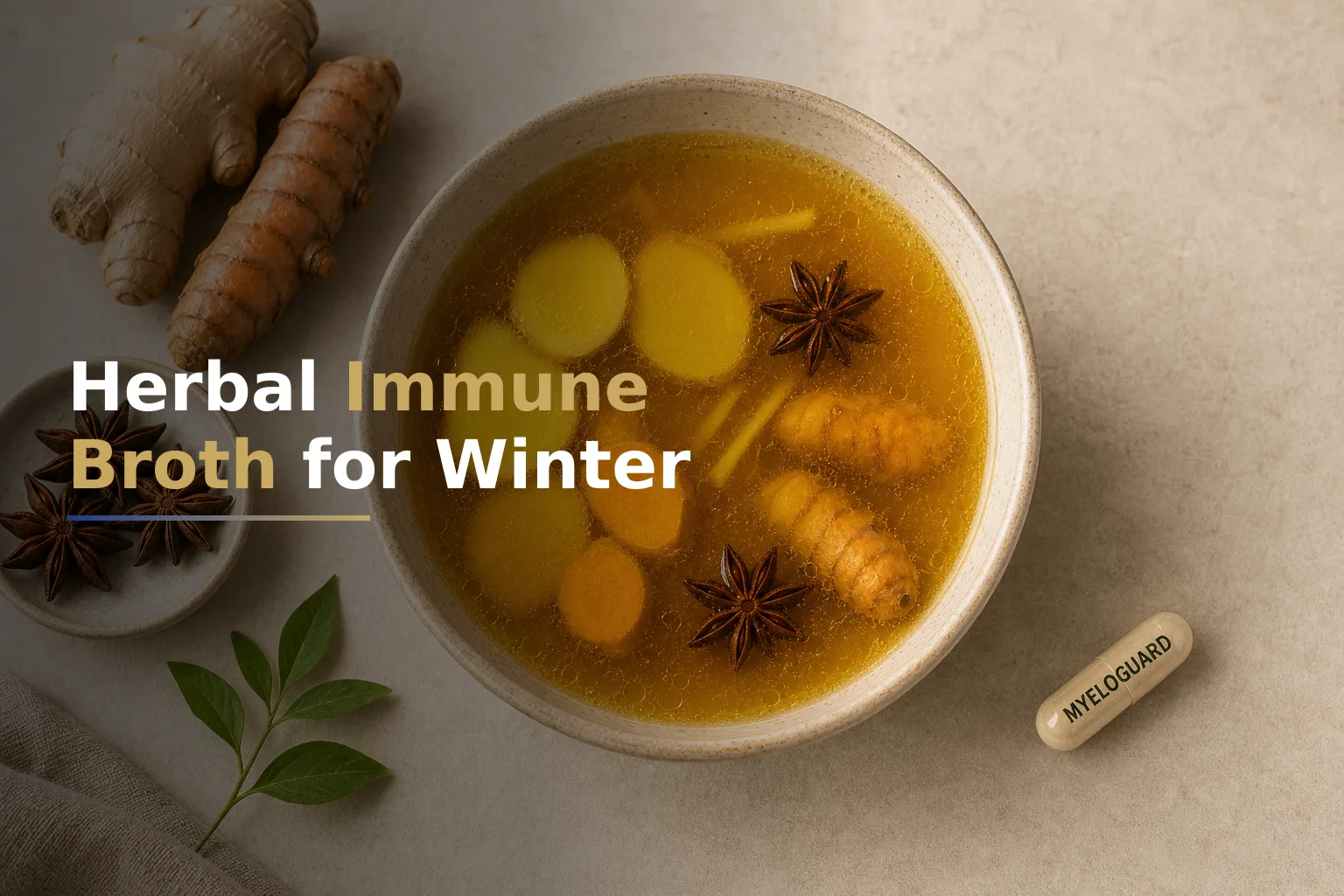
The supplement aisle sells bottles. The kitchen uses a pot on the stove. Both have value. The real question is whether the herbs in winter broths actually work - and if so, how to use them well.
Why Simmering Matters
Simmering is one of the oldest ways to pull bioactive compounds from plants. With medicinal mushrooms and fibrous roots, a slow simmer for 90 minutes releases beta-glucans and polysaccharides that get trapped in cell walls. A quick steep does not extract them as well.
Home broths are not standardized extracts. The polysaccharide content changes based on the source material, simmer time, and water volume. The clinical evidence comes from studies using standardized doses, not from broth recipes. A broth can complement supplements, but it should not replace them.
What Research Shows About These Herbs
Astragalus Root
Researchers have studied Astragalus membranaceus for its polysaccharide content and effects on immune cells. A recent study found that astragalus polysaccharides restored immune function in diet-induced obese mice and balanced immune markers associated with immune homeostasis. Most of the research has been done in lab models. Human studies are limited. Use dried root slices for simmering and remove them before serving.
Reishi Mushroom
Ganoderma lucidum has been studied more than most culinary mushrooms. A randomized controlled trial in healthy adults found that beta-1,3;1,6 D-glucan from Ganoderma lucidum increased CD3+, CD4+, and CD8+ T-lymphocyte counts and natural killer cell counts compared to placebo, with no changes in liver or kidney function. The beta-glucan in dried reishi dissolves in water, making a long simmer the right extraction method. The whole slices taste bitter and should be strained before serving.
Dried Elderberry
Sambucus nigra has the most research of the three herbs in this recipe. A 2019 meta-analysis of randomized controlled trials found that black elderberry reduced upper respiratory symptoms and may shorten illness duration when taken at the start of infection. Raw elderberries contain compounds that cause stomach discomfort. Simmering for 90 minutes or longer removes these compounds and makes them safe for cooking. Dried berries add tartness that works well in savory broths.
For more on how combining several herbs in one formula may work better than using just one, see why herbal blends outperform single herbs for immunity.
Immune Herbal Broth Recipe
This broth is simmered once, portioned into jars, and reheated through the week. It is a base, not a finished soup - add noodles, miso, cooked greens, or a poached egg as you like. The recipe makes about two liters.
Ingredients
- 30 g dried astragalus root slices (remove before serving)
- 20 g dried reishi mushroom slices (bitter; strain before serving)
- 30 g dried elderberries
- 4 large shiitake mushrooms, fresh or rehydrated, roughly sliced
- 1 head of garlic, halved crosswise through the equator
- 40 g fresh ginger root, roughly sliced, unpeeled
- 1 tsp ground turmeric, or a 3 cm piece of fresh turmeric root
- 1 tsp whole black peppercorns
- 2 medium carrots, roughly chopped
- 2 celery stalks, roughly chopped
- 1 tbsp apple cider vinegar (aids mineral extraction from bones if used; omit for a plant-based version)
- 2.5 liters cold water or unsalted vegetable stock
- Fine sea salt, added to taste when serving
Method
- Combine all ingredients except salt in a large pot or slow cooker.
- Bring to a gentle boil over medium heat, then reduce to the lowest simmer. A slow, steady simmer extracts polysaccharides better than a rolling boil.
- Simmer uncovered for 90 minutes to 2 hours. The liquid will reduce and deepen in color.
- Strain through a fine-mesh sieve or a cheesecloth-lined colander. Discard the astragalus slices, reishi, and spent elderberries. You can save and eat the shiitake mushrooms.
- Season lightly with fine sea salt. Keep in the refrigerator for up to five days, or freeze in 250 ml portions for up to three months.
- To serve, reheat a 250-300 ml portion. Finish off the heat with miso paste stirred in, sliced spring onions, cooked soba noodles, or a soft-boiled egg.
When buying: the quality of dried astragalus and reishi varies by supplier. Check the country of origin, heavy metal testing, and whether the herb is standardized before buying in bulk. The same applies to whole dried herbs as to other herbal products.
Where Myeloguard Fits
The broth gives you the kitchen part of a winter immune routine. Supplements work differently: standardized extracts deliver fixed, consistent amounts of active compounds that home broth cannot reliably match. Myeloguard Herbal Immune, taken as directed, provides a measured herbal immune formula that goes with rather than replaces the broth. The two work in different ways - one slow, warm, and part of a meal; the other consistent and measured. Using both adds value without duplication.
If you want to know whether to take supplements all season or only when symptoms start, see preventive versus reactive herbal immune dosing.
What to Realistically Expect
The evidence for elderberry - supported by the 2019 meta-analysis and a 2021 systematic review on elderberry for viral respiratory illnesses - is among the most solid in the herbal immunity field. The reishi beta-glucan data from a randomized trial in healthy adults is encouraging. The astragalus research is interesting but remains mostly lab-based in humans. None of this means reliable protection against illness from home-broth recipes. It does not replace vaccination, enough sleep, or medical care when symptoms are serious.
Make the recipe a weekly habit, not an emergency fix. A broth made regularly through the cold season, with a fixed-dose supplement plan, enough sleep, and a varied diet, represents the kind of layered approach the evidence supports. Explore the full Immunity and Wellness collection to build a seasonal plan around it - and use the broth as the ritual that makes the rest easier to keep up with.
¿Quieres más artículos como este? Únete al Círculo Íntimo y recibe una pieza cuidada cada domingo.