
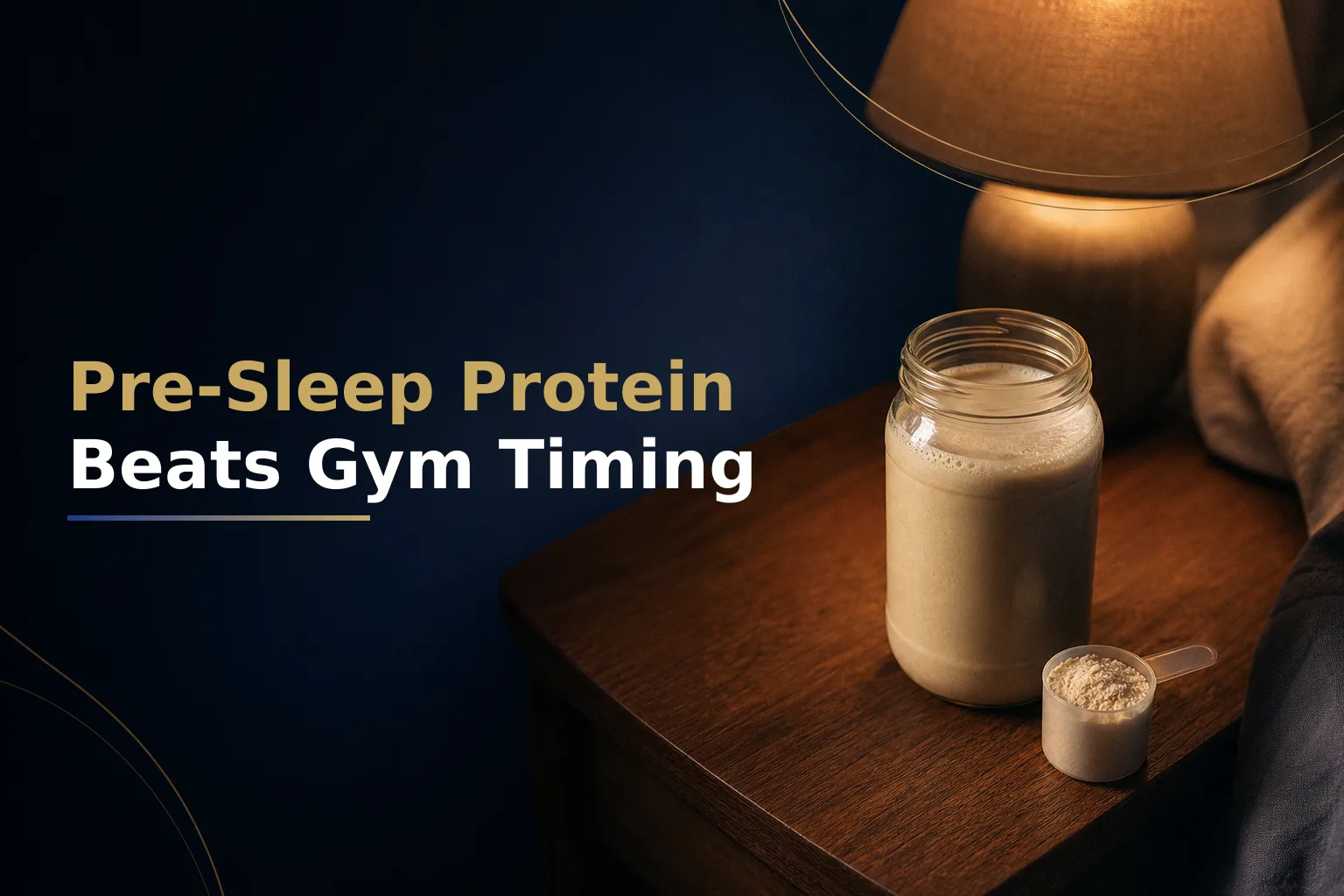
The supplement industry created a story about a narrow window: take protein within 45 minutes after your workout, or your muscles miss the signal. That's partly true. A 2013 review in the Journal of the International Society of Sports Nutrition found that protein's muscle-building effect continues for more than 60 minutes after exercise, and that your total daily protein intake matters much more than timing. But there's another window no one talks about - eight hours long, every night when most people aren't thinking about nutrition.
The Eight-Hour Window You're Missing
Sleep doesn't turn off your metabolism. Your body keeps repairing tissue, releasing hormones, and renewing cells all night. What stops overnight muscle protein synthesis is the lack of dietary amino acids - the building blocks your body needs. Most adults sleep fasted, so muscle protein synthesis competes for a small pool of amino acids at the exact time growth hormone is most active.
Researchers at Maastricht University in the Netherlands started studying this question in the early 2010s: is protein eaten before sleep actually digested, absorbed, and used to build muscle overnight? After a decade of controlled studies, the answer is yes.
What the Controlled Trials Found
A key study came out in 2015. Snijders and colleagues tested 44 healthy young men who did resistance training for 12 weeks. One group got casein protein before sleep. The other got a placebo. After 12 weeks, the protein group gained more lean muscle and leg strength. The pre-sleep protein caused this gain - not differences in how much they trained.
Later studies asked how much protein you need for overnight muscle growth. A 2019 review of all the evidence found that you need at least 40 grams of protein to raise overnight muscle protein synthesis. Below that amount, results across studies became inconsistent.
A 2017 analysis in PeerJ challenges the post-workout timing focus. It found that eating protein before or after exercise produced the same muscle gains when total daily protein stayed the same. The post-workout window matters - but it's not the only window that counts. For more on post-exercise timing, see our article on Post-Workout Protein Timing and the Muscle Repair Window.
Does Protein Type Matter Overnight
The original Maastricht studies used casein protein because it digests slowly - it forms a gel in your stomach and releases amino acids for six to seven hours. That matched the overnight fast well. The logic made sense. But newer research challenges this idea.
A 2023 study compared whey and casein protein taken before sleep during recovery from endurance exercise. The study, published in full on PMC, found no significant difference between the two types in overnight muscle protein synthesis. What matters is having enough amino acids - not how fast they release.
A 2020 study compared whey and plant-based protein taken before sleep during muscle recovery from exercise. Results available on PMC showed that plant-based protein worked as well as whey, if it had enough leucine and other amino acids. Mixing whey and plant protein gives you complete amino acids and works better for people who don't tolerate dairy well. For more on why blended proteins work, see our article on Plant-Whey Blends Outperform Single-Source Proteins.
Building the Ritual
Translating a research protocol into a consistent nightly habit involves three practical decisions: timing, dose, and composition.
Timing. The Maastricht studies used about 30 minutes before sleep. That's long enough for your stomach to start digesting the protein but close enough to sleep to matter for overnight recovery. Thirty minutes is a good target for most people.
Dose. The evidence points to 40 grams as the threshold for good overnight muscle protein synthesis. That's roughly double the serving size on many protein products. If you use pre-sleep protein for recovery, check your product label and make sure it has 40 grams before making it a habit.
Composition. A whey-and-plant protein blend gives you fast amino acids from dairy plus slower amino acids from plants, spreading the supply across the night. 14i Super Protein (Vanilla) is a whey-plant blend designed for this. Take it 30 minutes before sleep following package directions, and check that it has 40 grams of protein per serving.
Evening strength training can boost the overnight effect, if it fits your schedule. The Maastricht researchers found that evening exercise increases how much pre-sleep protein boosts muscle growth - more amino acids go to building muscle instead of energy. It's helpful but not required.
Who Should Pause Before Starting
The strongest evidence is for healthy adults who do regular strength or endurance training - mostly younger to middle-aged people in the studies. Evidence for people who don't exercise is weaker. Pre-sleep protein doesn't seem to reduce your morning appetite or weaken the effect of breakfast protein, so the overnight protein adds to your nutrition instead of replacing it.
If you have kidney or liver disease, or a medical reason to limit protein, talk to your doctor before adding pre-sleep protein. The same goes if you're pregnant, breastfeeding, or taking medication that affects protein or nitrogen metabolism.
To learn more about the protein blend, visit the 14i Super Protein (Vanilla) product page. For other protein and superfood options, browse the Ayurnomics Superfoods and Greens collection.
¿Quieres más artículos como este? Únete al Círculo Íntimo y recibe una pieza cuidada cada domingo.