
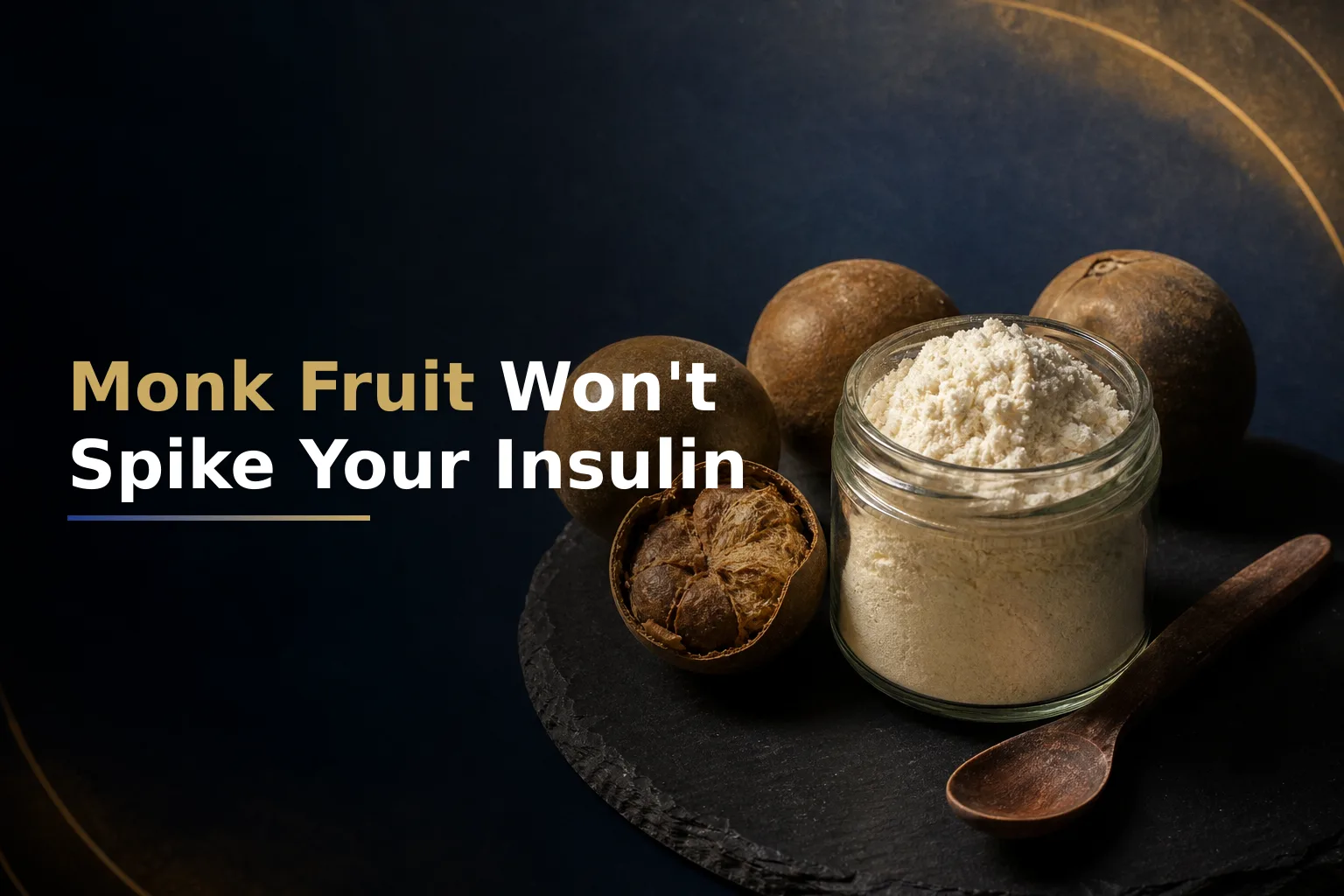
The sweetness of monk fruit (Siraitia grosvenorii) is real. So is the sweetness of aspartame. But the metabolic stories they tell after you swallow are different, and understanding the difference requires looking past the label claim of "zero calories" to the chemistry underneath.
Two Molecules, Two Different Metabolic Paths
Aspartame is a dipeptide ester - aspartic acid bonded to the methyl ester of phenylalanine. The body breaks it into its amino acids and methanol. No glucose is produced. Under normal conditions, blood sugar does not rise. By this measure, aspartame has little metabolic effect.
Mogrosides - the plant compounds that make monk fruit sweet - are structurally different. They are triterpenoid saponin glycosides: their carbon structure uses a terpene backbone, not a simple sugar chain. Mogroside V, the main sweetening compound in the fruit, is chemically different from conventional saccharides. A 2023 review of the monk fruit extract research documented work on mogrosides and their metabolic effects, showing the compound's different profile compared to traditional sweeteners.
This structural difference matters. It is why the two sweeteners, which taste equally sweet, seem to affect how your body manages insulin differently.
The Cephalic Phase: Sweetness Before the Stomach
Before a single calorie reaches your stomach, your body can already be preparing for it. The sight, smell, and taste of food - especially sweetness - trigger what scientists call the cephalic phase response: a series of reflexes that include salivation, digestive enzyme release, and sometimes insulin release from the pancreas.
This insulin release, called the cephalic phase insulin response (CPIR), is well-documented for sucrose. Whether non-caloric sweeteners can trigger it is less clear. A review of CPIR in humans, published in PMC, found that the effect exists but varies greatly between people and is generally small compared to the full insulin response after eating. Progress has been slow, the authors noted, because study designs are inconsistent and the effects are small and hard to measure.
For aspartame specifically, evidence on CPIR is mixed. A study measuring insulin responses to both regular and low-calorie sweeteners in solid and drink form, published in Appetite, found that responses differed based on sweetener type, form, and the individual. The data don't clearly show that aspartame causes CPIR, though some people might respond.
This uncertainty matters because even a small, inconsistent insulin pulse - if it happens when someone is fasting or eating low-carb - could cause a brief drop in blood glucose. Whether you feel tired or foggy depends on your metabolic state. The mechanism is plausible even though the clinical evidence is still uncertain.
The 2017 Head-to-Head Trial
The best human comparison in published research comes from a 2017 study in the International Journal of Obesity. Thirty healthy men drank beverages sweetened with one of four options on separate days: aspartame, monk fruit extract, stevia, or sucrose. Researchers measured blood glucose and insulin at 15-minute intervals for the first hour, then every 30 minutes for the next two hours.
Sucrose produced the highest glucose and insulin spikes. Monk fruit and stevia showed smaller responses compared to sucrose. All three non-sucrose sweeteners produced different glucose patterns than sucrose. What matters is what each one does through its own mechanism and whether those effects influence energy and appetite later.
The study also measured how much the men ate at a later lunch. People in the non-sucrose groups did not overeat at the next meal to make up for the lower-calorie drink. This finding is important because some worry that artificial sweeteners make people hungry later.
What Mogrosides Do and Do Not Do in the Body
Mogrosides do more in your body than just taste sweet. A study of mogroside V isolated from luo han kuo found that it increased insulin secretion from pancreatic beta cells in a lab model. The researchers called this finding important for beta cell function. But pay attention: making isolated cells release insulin in a dish is not the same as raising blood insulin in a living person. Lab results on isolated cells don't automatically apply to what happens in humans after eating.
In another study, researchers looked at mogrosides on beta cells under stress. A study using mouse insulin cells found that mogrosides reduced oxidative damage caused by palmitic acid - a saturated fat that harms beta cells. Again, a lab model, not a human trial. But it shows mogrosides do more than just taste sweet and have different biochemical effects than anything studied with aspartame.
At the human level, a recent review of randomized trials on monk fruit extract and metabolic effects found that monk fruit extract is generally safe and does not cause significant glucose or insulin spikes after eating in controlled studies. The review also noted that most available human trials are short-term, and longer studies remain limited - a real gap in the research that deserves honest acknowledgment.
Why Glucose Variability Connects to Energy
The connection to daily energy is indirect but makes biochemical sense. When blood glucose rises sharply after eating sucrose, the body's insulin response drives glucose into cells quickly - which can then cause blood glucose to drop, producing what many people experience as an energy crash. This is not clinical low blood sugar. But the post-lunch fog, the mid-morning slump after a sugary coffee, the afternoon drop that comes roughly 90 minutes after a high-sugar meal - these follow a common physiological pattern, even if the strength varies between people.
Choosing a sweetener that doesn't spike blood glucose doesn't guarantee steady energy. Diet composition, sleep quality, exercise, and stress physiology each influence energy metabolism far more than any single sweetener choice. But it makes sense to choose a sweetener whose mechanism doesn't add glucose swings to an already variable system. The connection between nutritional choices and steady energy throughout the day is discussed in depth in the Ayurnomics piece on why afternoon energy crashes outlast your multivitamin, which examines mineral timing, cortisol patterns, and the limits of single-nutrient fixes.
If you're managing blood sugar with supplements, the research on meal timing and related metabolic strategies is covered in the berberine and blood sugar timing piece in this journal.
Ayurnomics's Monk Fruit Sweetener uses mogrosides as its active ingredient, at amounts per manufacturer directions. If you take prescription medications - especially those affecting blood sugar - or if you are pregnant or breastfeeding, talk with your doctor before adding any supplement or making major dietary changes. If you're interested in metabolic support, the Weight Management collection provides an overview of the products and research Ayurnomics uses.
Vuoi altri contenuti come questo? Unisciti all'Inner Circle e ricevi un articolo curato ogni domenica.