
Most people recognize the afternoon focus dip by feel. The chemistry is less clear. Around 90 to 150 minutes after a moderate lunch, blood glucose begins to fall, cortisol reaches its lowest point, and the amino acid pool that feeds dopamine synthesis has peaked and started to drop. A 2012 study in the European Journal of Clinical Nutrition found that modulating the postprandial glucose profile at a meal significantly changed selective attention performance in the late postprandial period - roughly 75 to 225 minutes after eating, a window that closely matches the afternoon slump for anyone who eats lunch near noon.
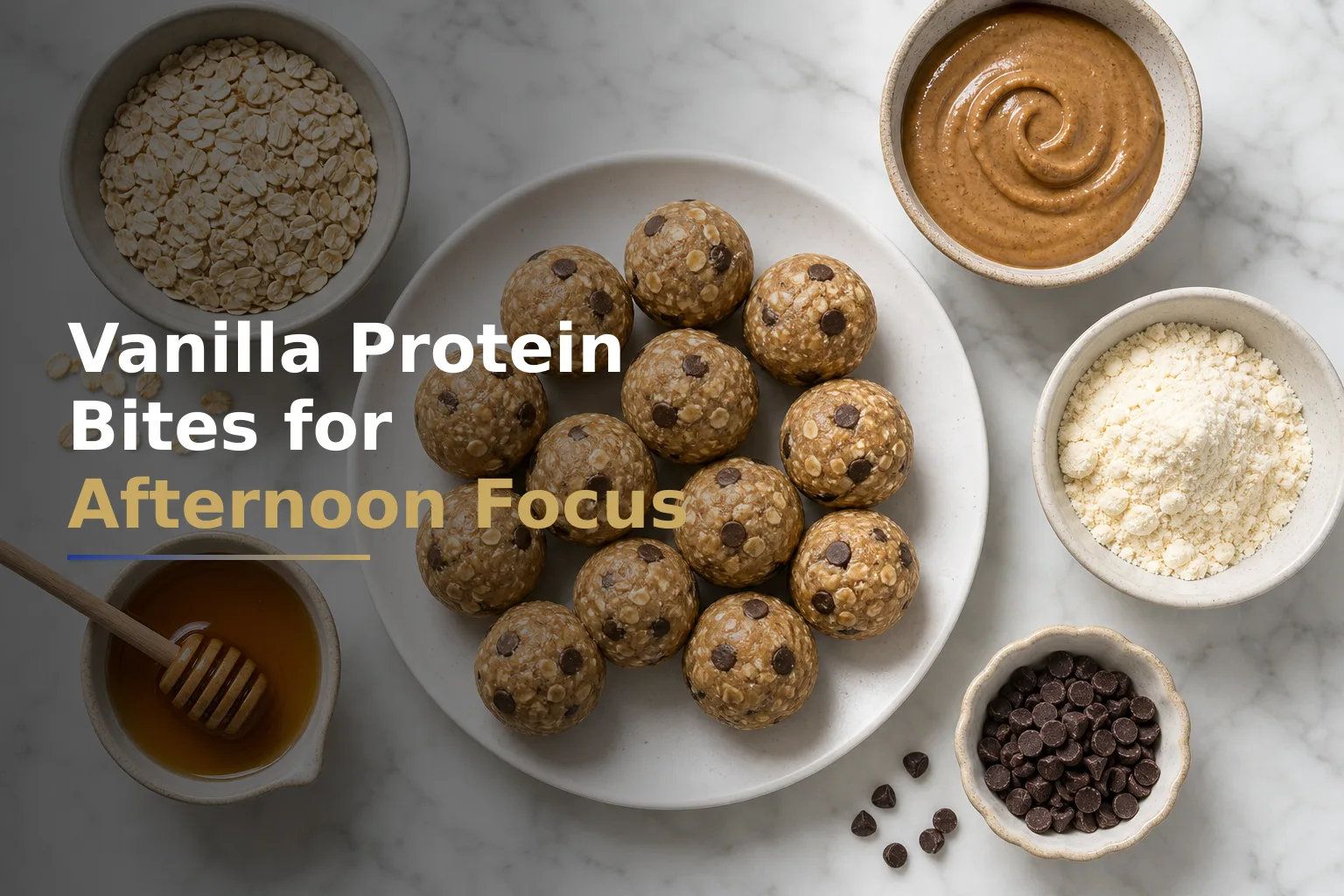
This recipe is designed for that window. Vanilla almond butter protein bites deliver a controlled amount of protein alongside fat that slows glucose absorption and oat fiber that helps you feel full - all in a format that requires no heat, stores for five days in the refrigerator, and includes only necessary ingredients.
What the Protein Is Actually Doing
Protein works in two ways here. The first is mechanical: protein slows gastric emptying and controls how quickly carbohydrates enter your bloodstream. This reduces the blood sugar peak after the snack and, more importantly, makes the drop that follows less severe - the low that feels like trouble concentrating or a strong craving for something sweet.
The second way is chemical. Dietary protein gives you large neutral amino acids, including tyrosine, that cross the blood-brain barrier and help make dopamine and norepinephrine. The NIH report on amino acid requirements and cognitive performance notes that neurons making these chemicals need more tyrosine when you're thinking hard - meaning enough dietary tyrosine matters most when your brain is working its hardest. A 2015 review in the Journal of Psychiatric Research found that tyrosine availability may support working memory and information-processing speed when you're thinking hard, though effects are smaller and less steady in people who are resting and not stressed.
A recent randomized study found that whey and a plant-based protein blend produced comparable effects on postprandial appetite ratings and subsequent energy intake in healthy adults - evidence that a blended protein source works just as well for a snack designed to ease the afternoon dip.
The protein dose in each batch comes from one measured scoop of Ayurnomics's 14i Super Protein (Vanilla) (per manufacturer directions), a whey-plant blend that provides both fast-absorbing and slow-release amino acids - a distinction that matters for a snack meant to keep your energy steady instead of spiking.
Why Almond Butter, Specifically
Almond butter is in this recipe for more than flavor. Almonds are high in monounsaturated fatty acids (MUFAs), and a 2008 trial in the American Journal of Clinical Nutrition found that a MUFA-enriched meal produced a significantly lower postprandial glucose area under the curve compared to a meal enriched in saturated fatty acids, with a similar reduction in the postprandial insulin response. Fat slows gastric emptying and moderates glucose absorption. In a recipe built for steady energy, almond butter plays an important role alongside its flavor.
A 30-gram serving of almond butter also gives you magnesium, vitamin E, and a gram or two of fiber. This isn't saying the ingredient addresses a deficit. Rather, it's context for why each tablespoon matters in a snack made for steady blood sugar.
The Recipe
No oven required. Active preparation time is under fifteen minutes. The bites keep for up to five days in a sealed container in the refrigerator, or up to one month in the freezer - so you can make them on Sunday and have them for the week.
Makes approximately 12 bites
Ingredients
- 1 scoop vanilla whey-plant protein blend (per manufacturer directions)
- 90 g rolled oats, not instant
- 120 g unsweetened almond butter, at room temperature
- 3 tablespoons raw honey or pure maple syrup
- 1/2 teaspoon pure vanilla extract
- 1 pinch fine sea salt
- 2 tablespoons hemp seeds (optional)
- 30 g dark chocolate chips, 70% cacao minimum (optional)
Method
- In a medium bowl, stir together the protein powder, rolled oats, and sea salt until evenly combined.
- Add the almond butter, honey or maple syrup, and vanilla extract. Mix with a spatula until the mixture forms a thick, slightly tacky dough. If it is too dry to press, add water one teaspoon at a time.
- Fold in hemp seeds and chocolate chips if using.
- Refrigerate the dough for 20 to 30 minutes. Chilling firms the oils in the almond butter and makes the mixture easy to roll without sticking.
- Portion into roughly 30-gram pieces (approximately one heaped tablespoon each). Roll between your palms into smooth balls and set on a parchment-lined tray.
- Refrigerate for at least one more hour before eating. Store covered in the refrigerator.
Substitutions and Adjustments
- Nut-free: Replace almond butter with sunflower seed butter. The fat profile will differ, but the role in the recipe is similar.
- Sweetener: Both honey and maple syrup are glucose-fructose mixtures. The amount used here is roughly one teaspoon spread across twelve bites, which is worth it for taste in a snack made for steady energy.
- Oat-free: Fine almond flour at a 1:1 weight ratio can substitute for rolled oats, though texture and fiber content will differ.
Timing These Through the Afternoon
The best window for this snack is roughly 30 to 45 minutes before your energy dips - which for most people eating lunch between noon and 1 p.m. falls around 2 to 2:30 p.m. Waiting until the dip hits means fighting a low that's already deepened. Eating the snack early works better than eating it after the slump.
Two bites is a good starting amount for most adults - enough to give you amino acids and a little blood sugar boost without adding too many calories. If you train in the evening, spreading protein through the day might matter beyond afternoon focus. The Ayurnomics Journal piece on post-workout protein timing and the muscle repair window explains how spacing protein across the day affects muscle protein synthesis after exercise.
For more on why caffeine tends to fall short as an afternoon fix on its own, the Ayurnomics Journal piece on why blended protein can outperform caffeine for afternoon focus explains adenosine rebound and how your body builds tolerance to caffeine.
If you take prescription medication, are pregnant, or are breastfeeding, talk with your doctor before adding a protein supplement to your routine. Protein powder formulations vary in what's in them, and your doctor is better able than any recipe to advise on what works for you.
To explore the full Superfoods & Greens range and the vanilla protein blend used in this recipe, see the 14i Super Protein Vanilla formulation page.
Envie de découvrir d'autres articles comme celui-ci ? Rejoignez le Cercle Privilégié et recevez un article soigné chaque dimanche.