
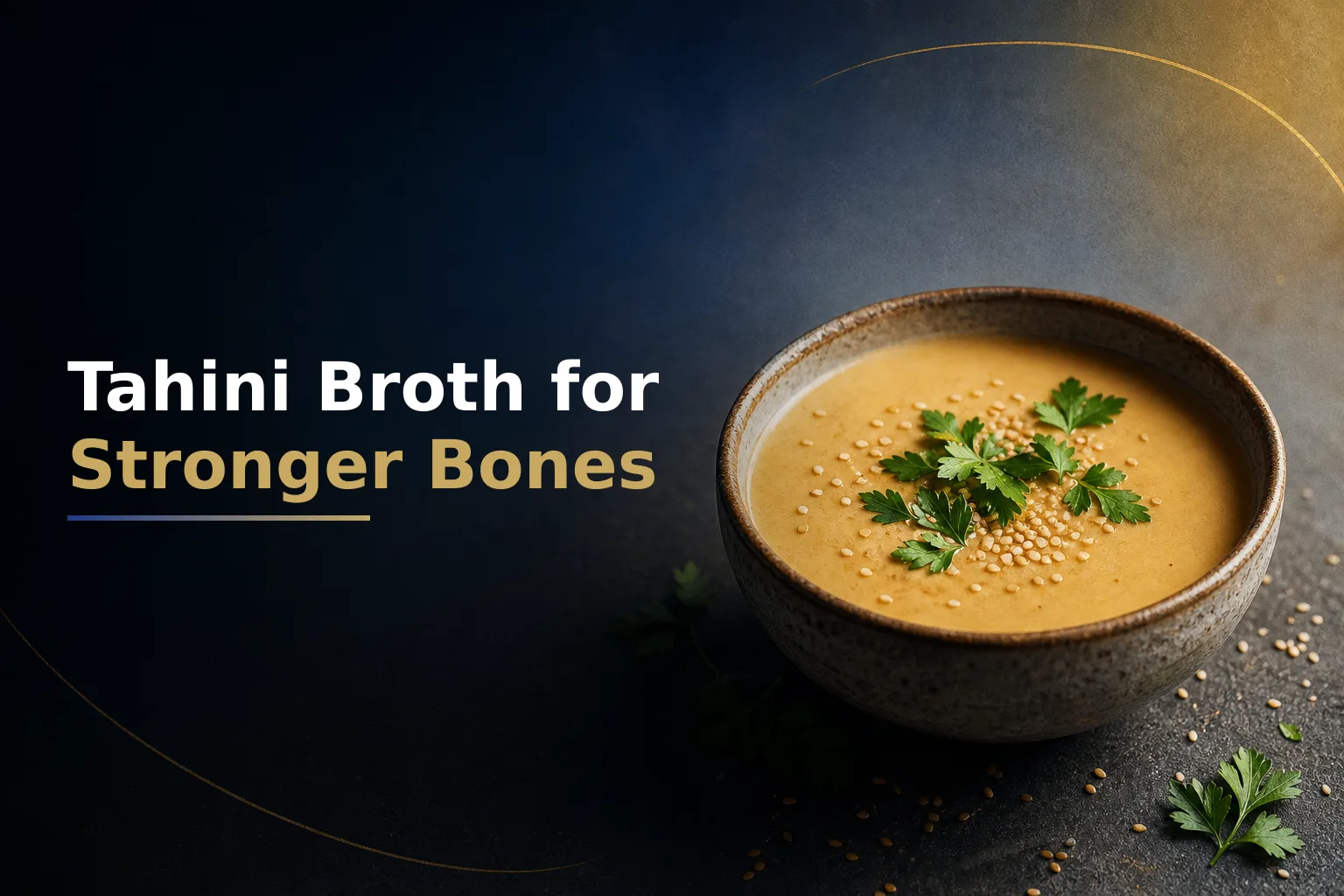
Most people know bone health needs calcium and supplements. Few know that bone is mostly collagen, which needs copper to make it strong. A diet high in calcium but low in copper only half-works. This recipe gives you both minerals in a way your body can actually use: an acidic environment and proper cooking time.
Before the Recipe: Why These Two Ingredients Belong Together
The NIH Office of Dietary Supplements says adults need 1,000 mg of calcium daily (ages 19-50), rising to 1,200 mg for women over 50 and men over 71. Most adults in Western countries don't get enough. Sesame seeds pack a lot of calcium: a 2023 review in Nutrients found whole sesame seeds have about 900 mg per 100 g. But oxalic acid and phytic acid in sesame bind calcium and stop your body from absorbing it. Hulled tahini (where the outer coat is removed) has less of these acids, but also loses much of the calcium in the hull. This recipe works around this problem.
Copper's role in bone gets less attention but matters. Lysyl oxidase uses copper to cross-link collagen and elastin fibers in bone. A study in the Journal of Nutrition showed that copper-deficient diets reduce bone strength by cutting the amino acids that cross-link collagen. Without these cross-links, calcium makes bone dense but brittle.
A 2025 review in Calcified Tissue International of bone density studies found that eating more dietary copper linked to better bone density at multiple sites. The authors noted differences between studies, so this is an association, not proof. Whole-sesame tahini is one of the most copper-rich plant foods. Long-simmered bone broth adds trace copper along with glycine, proline, and hydroxyproline - amino acids that build collagen.
A Note on Hulled Versus Unhulled Tahini
The difference matters more than you'd think. Most tahini is made from hulled, lightly roasted sesame. Hulling removes the outer coat and makes a pale, creamy paste, but it removes most of the calcium and copper in the hull. For this recipe, buy "whole sesame" or "unhulled" tahini. It will be darker, taste more bitter, and have much more minerals. The bitter taste works in a savory broth, and it's worth it for the extra minerals.
Sesame Tahini Bone Broth Bowl
Ingredients (Serves 2)
- 480 ml (2 cups) bone broth, preferably simmered for 8 or more hours with 1 tablespoon apple cider vinegar added per litre of water at the start (see preparation note below)
- 4 tablespoons (60 g) whole-sesame unhulled tahini
- 2 tablespoons fresh lemon juice
- 1 small clove garlic, finely grated
- 1/2 teaspoon ground cumin
- 1/4 teaspoon ground turmeric
- 1/4 teaspoon fine sea salt, or to taste
- White pepper to taste
- 2 tablespoons warm water, to loosen the paste
- To finish: flat-leaf parsley, whole sesame seeds, a drizzle of olive oil
Optional additions
- 100 g cooked chickpeas per serving - a copper-containing legume that adds about 3 g of protein per 100 g
- 50 g lightly sauteed shiitake mushrooms per serving
- One soft-poached egg per serving (the yolk provides vitamin D, which the NIH-ODS says your body needs to absorb calcium)
Method
- In a small bowl, whisk tahini, lemon juice, grated garlic, cumin, turmeric, salt, and warm water until smooth and pourable, about the thickness of heavy cream. The lemon juice's acid starts to break down phytic acid in the sesame, which helps your body absorb more of the minerals. Don't skip this step.
- Heat the bone broth to a gentle simmer over medium heat. If using store-bought broth, stir in one teaspoon of apple cider vinegar and let it simmer uncovered for five minutes.
- Lower the heat to low. Whisk the tahini mixture into the warm broth one tablespoon at a time until mixed in. Don't let the soup boil once the tahini is in. High heat makes the fats separate and ruins the texture.
- Add the chickpeas and mushrooms (if using) and warm for two minutes.
- Taste and adjust salt. Pour into two bowls, top with parsley and sesame seeds, and drizzle with olive oil.
Preparation note: why acid and time matter in the broth
Bone broth's mineral content depends heavily on how you make it. Studies measuring metals in bone broth found that adding acid increased calcium extraction by about 17 times and magnesium by about 15 times compared to broth with no acid. Simmering longer than 8 hours also pulled out much more calcium and magnesium than shorter cooking. The same study found higher lead levels in longer-simmered broths. If you eat bone broth often, buy bones from suppliers who test for heavy metals.
What the Evidence Shows and What It Does Not
One bowl won't change your bone density. But this recipe delivers calcium and copper in a form that addresses the main absorption factors: acid for releasing minerals and breaking down phytates, plus amino acids from broth that help build collagen. These add up over days and weeks, not overnight.
The evidence for hydrolysed collagen peptides is different from the evidence for bone broth, and that's worth knowing. A 2018 trial in Nutrients showed that 5 g of hydrolysed collagen peptides daily for 12 months improved bone density at the spine and hip in women after menopause, compared to placebo. Bone broth gives you raw amino acids like glycine, proline, and hydroxyproline that help build collagen. But these aren't the same as the processed peptides in that trial. They're different, but bone broth has a lot of the same amino acids, so it's a real food option for supporting collagen synthesis.
Calcium absorption from plant foods also depends on vitamin D. The NIH says intestinal calcium absorption drops below 15 percent when vitamin D is low. A meal with calcium but no vitamin D is only half a solution. The soft-poached egg suggested above adds some vitamin D through the yolk. But for real vitamin D status in most places, you need either sun exposure or a supplement checked by a serum 25(OH)D test.
How This Recipe Fits a Wider Approach
This recipe matches each nutrient to the conditions that help your body absorb it. That same logic applies to other nutrients important for joints. The companion recipe on curcumin with ghee and black pepper uses the same principle with a different compound studied for joint health.
If you use collagen supplements, the piece on why collagen supplement absorption differs between product types might help with your next purchase.
If you take prescription medications, especially bisphosphonates, calcium channel blockers, or drugs with mineral interactions, talk to your doctor before changing how much copper or calcium you eat. The same goes if you're pregnant or breastfeeding, because your mineral needs change during those times.
Find more recipes, sourcing guides, and articles in the Joint and Bone collection.
Möchten Sie mehr davon? Treten Sie dem Inner Circle bei und erhalten Sie jeden Sonntag einen sorgfältig kuratierten Beitrag.