
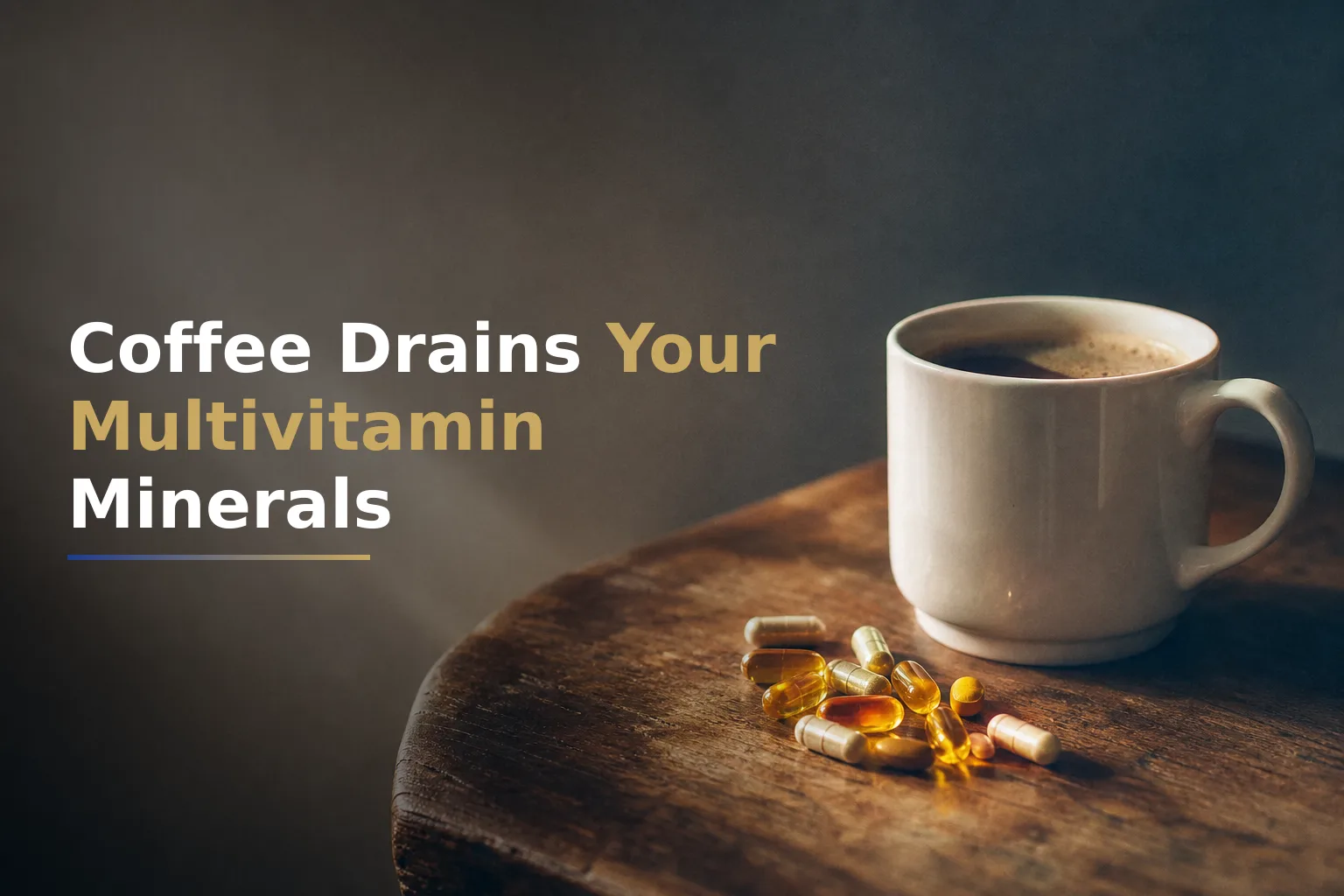
Most people take their multivitamin with their first cup of coffee. It seems efficient - doing two things at once. But you probably don't notice anything wrong. Two things happen when you take a vitamin with coffee. Polyphenolic acids in the coffee bind mineral ions in your intestines before they can be absorbed. Caffeine also makes your kidneys get rid of more calcium and magnesium. You won't feel this happening, but it is.
Two Distinct Mechanisms, Not One
Coffee affects minerals in two different ways. When you take a multivitamin with coffee, you lose out in both ways. First, polyphenols in coffee bind to iron and zinc in your intestines before they can be absorbed. Second, caffeine tells your kidneys to get rid of more calcium and magnesium. Understanding which minerals are affected is the first step to fixing the problem.
Iron Takes the Biggest Hit
Coffee's effect on iron absorption is the clearest one we know about. A 1983 study in the American Journal of Clinical Nutrition found that iron absorption from a meal dropped from 5.88% to 1.64% when coffee was drunk at the same time - a 72% drop. Stronger coffee made it worse, with absorption falling to 0.53%. But coffee drunk an hour before the meal did not reduce absorption. Coffee drunk an hour after did reduce it, just as much as drinking it at the same time. This shows that the amount of polyphenols in coffee matters more than caffeine.
A systematic review of polyphenol-containing beverages found that drinks with 20-50 mg of polyphenols reduced iron absorption from bread by 50-70%. Those with 100-400 mg reduced it by 60-90%. A typical cup of filter coffee has about 200-550 mg of polyphenols, putting most cups in the highest range.
This is important for people taking multivitamins because most include non-heme iron - the kind in pills, not the kind in meat. According to the NIH Office of Dietary Supplements, non-heme iron is harder for your body to absorb even without coffee. Polyphenols and other things in food make it even harder when you take them at the same time.
Zinc Faces a Related, If Smaller, Problem
Zinc is affected by coffee in a similar way to iron, but we know less about it. A controlled study examining chlorogenic and caffeic acid ingestion found that these compounds in coffee reduced zinc absorption. But the human data are limited, and the effect is probably smaller than with iron. Zinc is important for your body to work properly, and older adults and people who eat a limited variety of foods often don't get enough. Taking a zinc multivitamin with coffee is still not ideal, even if the effect is smaller.
Caffeine Acts on the Kidneys, Not Just the Gut
This second problem comes from caffeine itself, not from polyphenols. Caffeine makes your kidneys get rid of more calcium and magnesium in your urine. A controlled crossover study in adult women found that caffeine increased calcium and magnesium loss within two hours. Your body tries to save these minerals at night, but it can't save enough to make up for the morning losses. The net loss is 0.32 mmol of calcium and 0.16 mmol of magnesium per dose of caffeine.
Another study showed that this effect is dose-proportional - more caffeine means more loss. Your body doesn't adapt over time - the kidneys don't learn to save more calcium. So if you take a multivitamin with calcium and magnesium and also drink coffee, you lose out twice. The vitamin isn't absorbed completely, and then caffeine makes your body get rid of what you did absorb.
The Direction of the Sequence Matters
Coffee isn't dangerous. One cup won't hurt you if you eat well otherwise. The problem is doing this every day for years. People who take a mineral vitamin with coffee every morning get less from that vitamin than the label says, and they won't notice anything wrong.
The 1983 study shows the order matters. Coffee an hour before eating didn't reduce absorption, but coffee at the same time or an hour after did. Taking your multivitamin after coffee is better than taking it before. Wait 45-60 minutes after finishing coffee before taking the vitamin to block the polyphenol problem. But caffeine stays in your system for about five hours, so there's no perfect solution for calcium and magnesium - you can only reduce how much overlap there is.
The easiest fix is taking your multivitamin later in the day - with a mid-morning snack or lunch, after you've finished your coffee. For more on this, see our article on multivitamin meal timing and mineral absorption.
Who This Matters Most For
Different multivitamins have different amounts of minerals. Vitamins for women of childbearing age usually have 18 mg of iron - the full daily amount. Those for men and older adults often have little or none. A vitamin with a lot of iron loses the most when taken with coffee. Vitamins with less iron still have the calcium and magnesium problem from caffeine, but they're less affected by the polyphenol problem.
It matters most when the vitamin is actually fixing a gap in what you eat - iron for women before menopause, magnesium for people under stress, zinc for older adults with limited diets. According to the NIH Office of Dietary Supplements, multivitamins are among the most widely used supplements in the United States, so getting the timing wrong affects many people. If you're trying to fix a real gap, timing decides whether the gap actually closes or just looks closed on paper. To learn more about how minerals in the vitamin compete with each other before coffee comes into play, see our article on mineral competition in multivitamins.
If you take a multivitamin and drink coffee regularly, wait at least an hour between them. Nutricore-5 is a multivitamin and mineral formula meant to be taken with food, which works better than coffee. You can also check the Vitamins and Minerals collection to compare different options.
¿Quieres más artículos como este? Únete al Círculo Íntimo y recibe una pieza cuidada cada domingo.